Modular Buildings for Tourism and Hospitality Projects
Tourism and hospitality projects require more than guest cabins. ReachTop combines modular guest accommodation, reception buildings, restaurants, staff housing, offices and supporting facilities into phased building systems for resorts, hotels, eco lodges and tourism destinations.
Understanding Tourism & Hospitality Development Needs
Tourism and hospitality developments operate under fundamentally different constraints compared to traditional construction projects. Project timelines are closely tied to seasonal demand, investor expectations, and market launch windows. Delays in accommodation readiness can directly impact revenue generation, marketing momentum, and overall return on investment. For resort developers, eco-tourism operators, and hospitality brands, the ability to open earlier often translates into capturing peak-season revenue and strengthening market positioning ahead of competitors.
Unlike conventional buildings that require extended construction timelines, modular building systems enable hospitality operators to deploy guest accommodations, reception areas, staff housing, and operational facilities much earlier in the project lifecycle. This allows developers to begin partial operations, validate market demand, and generate cash flow while expanding the site in phases. In hospitality, speed to operation is often more valuable than speed of construction.
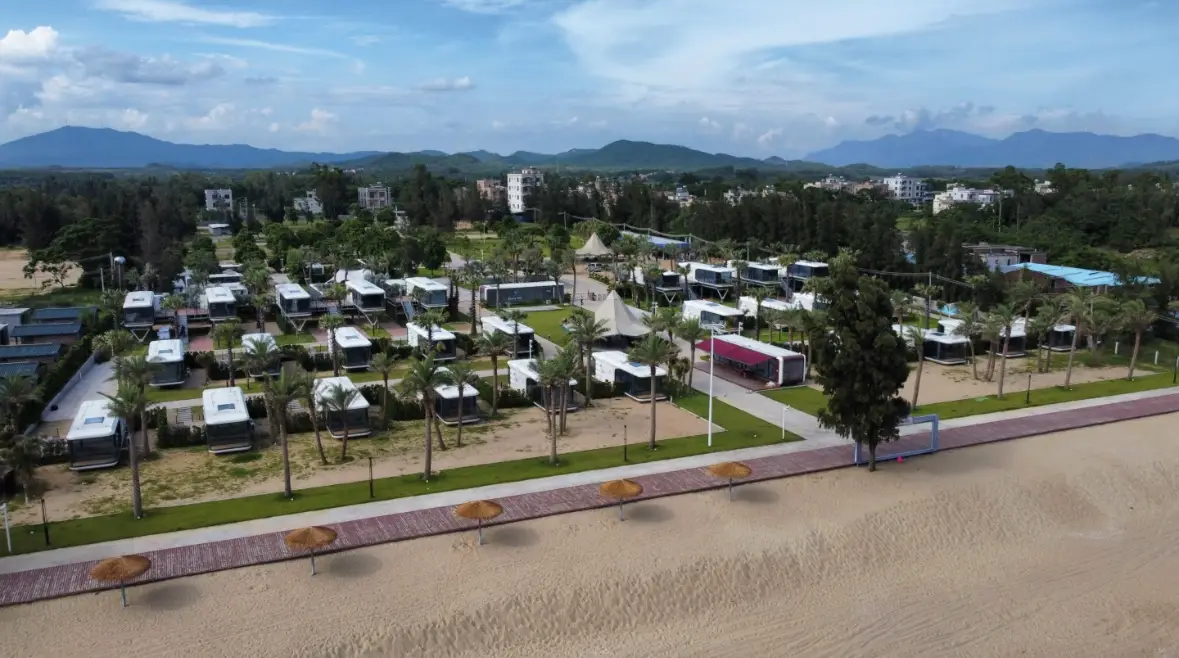
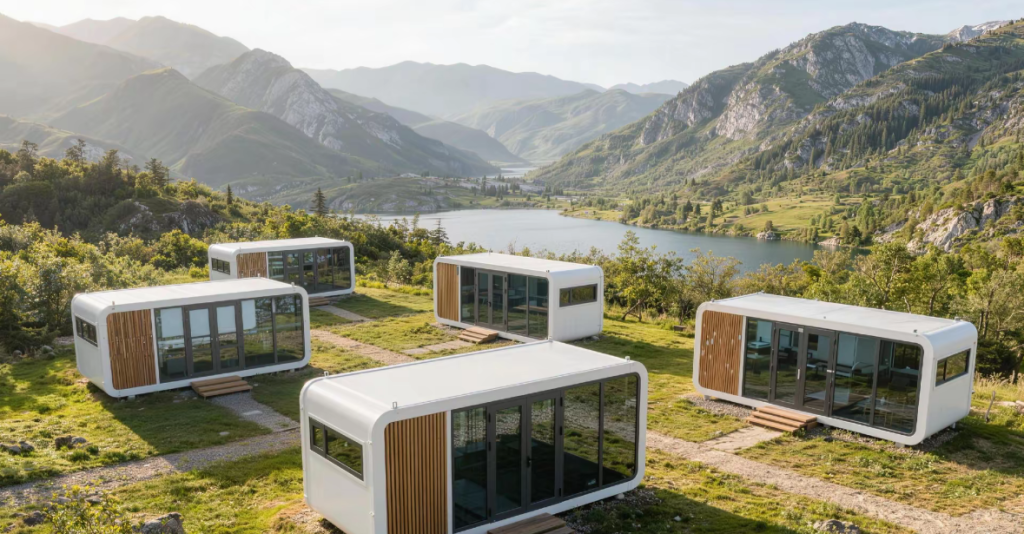
At the same time, modern travelers increasingly value unique accommodation experiences. Modular structures such as capsule houses, expandable container houses, detachable container houses, Apple Cabin Houses, and space capsule cabins are becoming popular not only for their efficiency but also for their distinctive architectural appeal. These structures can become visual highlights of the destination itself, enhancing brand identity and guest experience. Developers have the flexibility to customize different modular building types based on project positioning, landscape integration, and target customer segments—whether for luxury resorts, eco-lodges, beachfront accommodations, mountain retreats, or tourism camps.
Buildings Required Across Tourism and Hospitality Projects
Hospitality developments require more than guest rooms. A successful tourism project depends on a combination of guest accommodation, operational infrastructure, service buildings, and staff housing working together as a complete system.
Modular construction allows developers to deploy different types of buildings based on operational roles, architectural positioning, and guest experience objectives. From premium guest units to staff accommodation and operational facilities, modular systems provide scalable, factory-built solutions that support both project launch and long-term expansion.
Guest Accommodation Buildings
Apple cabin units are widely used in hospitality environments where visual appeal, guest comfort, and architectural presence are essential.
Common applications include:
Resort guest rooms
Boutique hotel expansions
Eco-tourism accommodation
Private villas and premium cabins
With fully finished interiors, modern architectural styling, and optional smart control systems, apple cabin units can be delivered ready for immediate operation. Their distinctive appearance enhances the visual identity of the property while significantly reducing construction timelines compared to traditional buildings. These units allow developers to launch premium accommodation faster while maintaining high design standards.
Reception and Front Desk Buildings
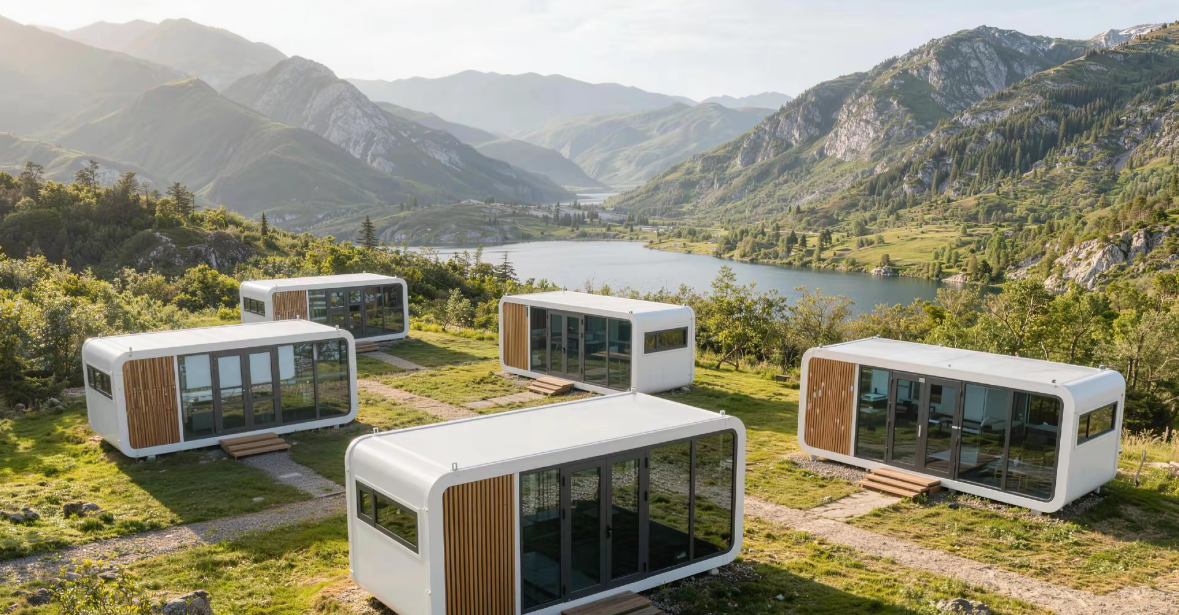
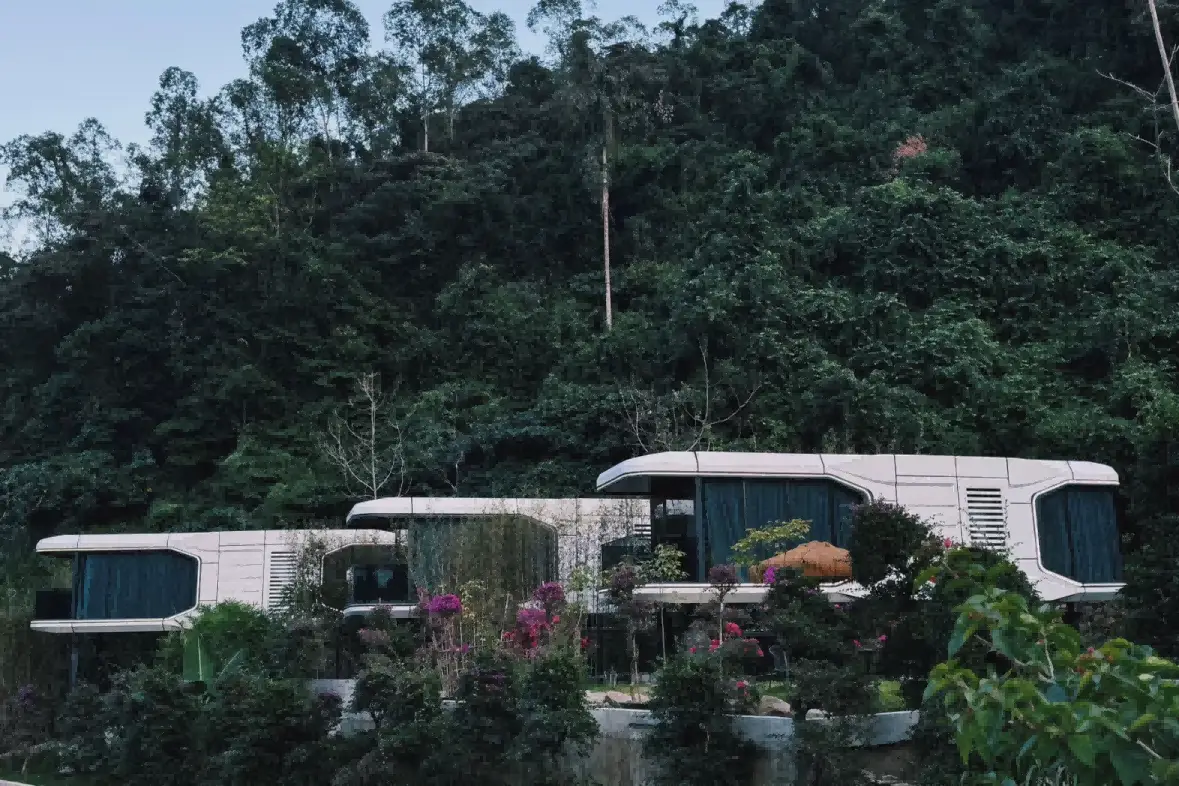
Space capsule units are designed for hospitality projects focused on creating memorable guest experiences and strong visual differentiation.
Common applications include:
Glamping resorts
Scenic tourism destinations
Luxury eco-lodges
Experience-driven accommodation
These units combine futuristic design with factory-completed interiors, allowing operators to introduce highly recognizable accommodation that enhances marketing appeal. Their iconic form helps hospitality brands attract attention, increase occupancy rates, and support premium pricing strategies, especially in competitive tourism markets.
Restaurants, Cafés and Shared Guest Facilities
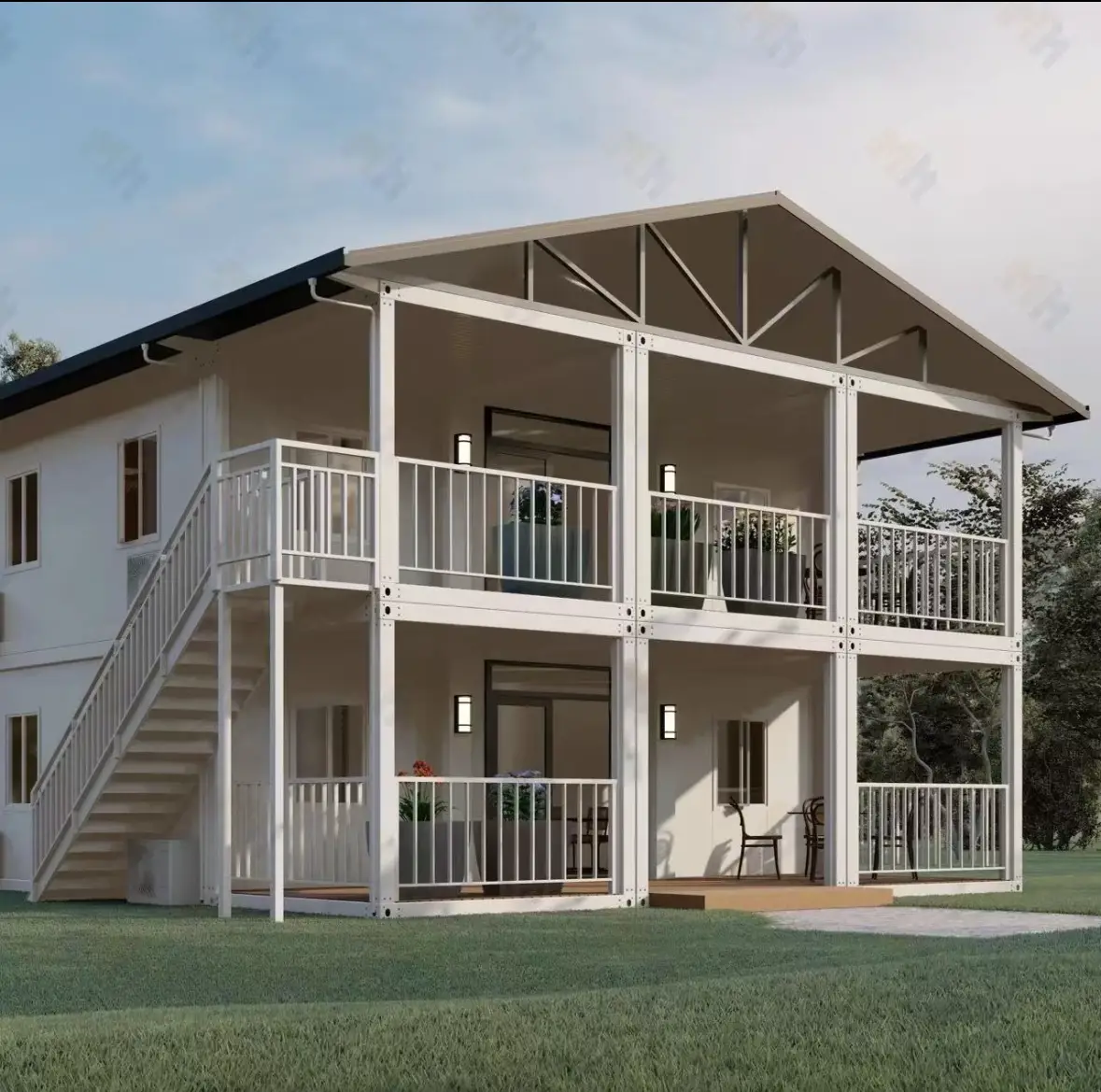
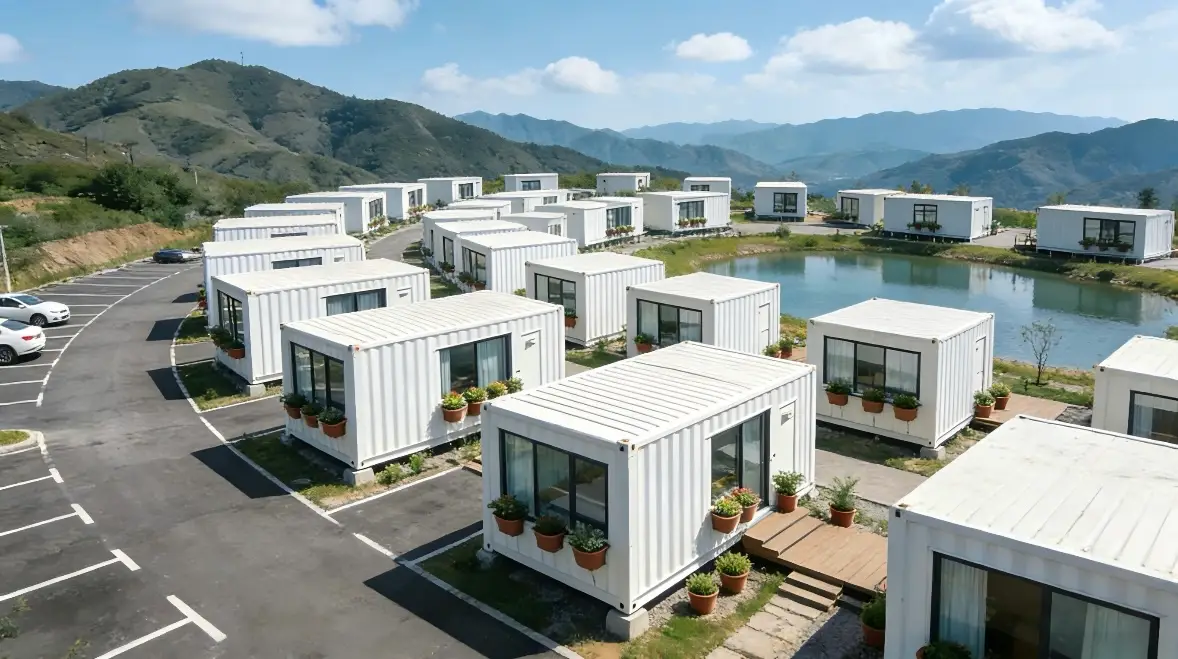
Deploy scalable staff and service infrastructure efficiently with container systems that preserve guest-facing aesthetics while ensuring operational excellence.
Sanitary, Storage and Utility Buildings
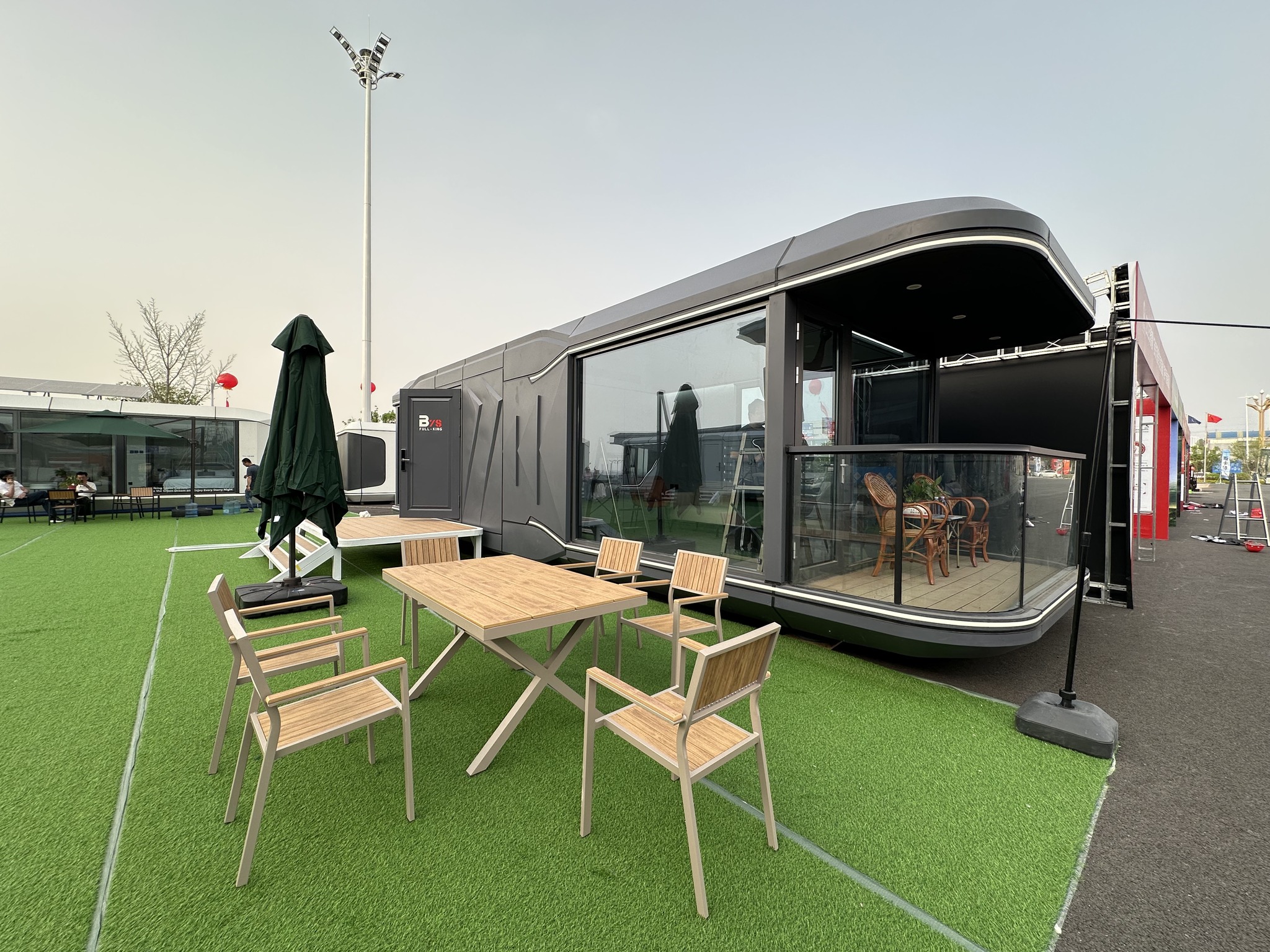
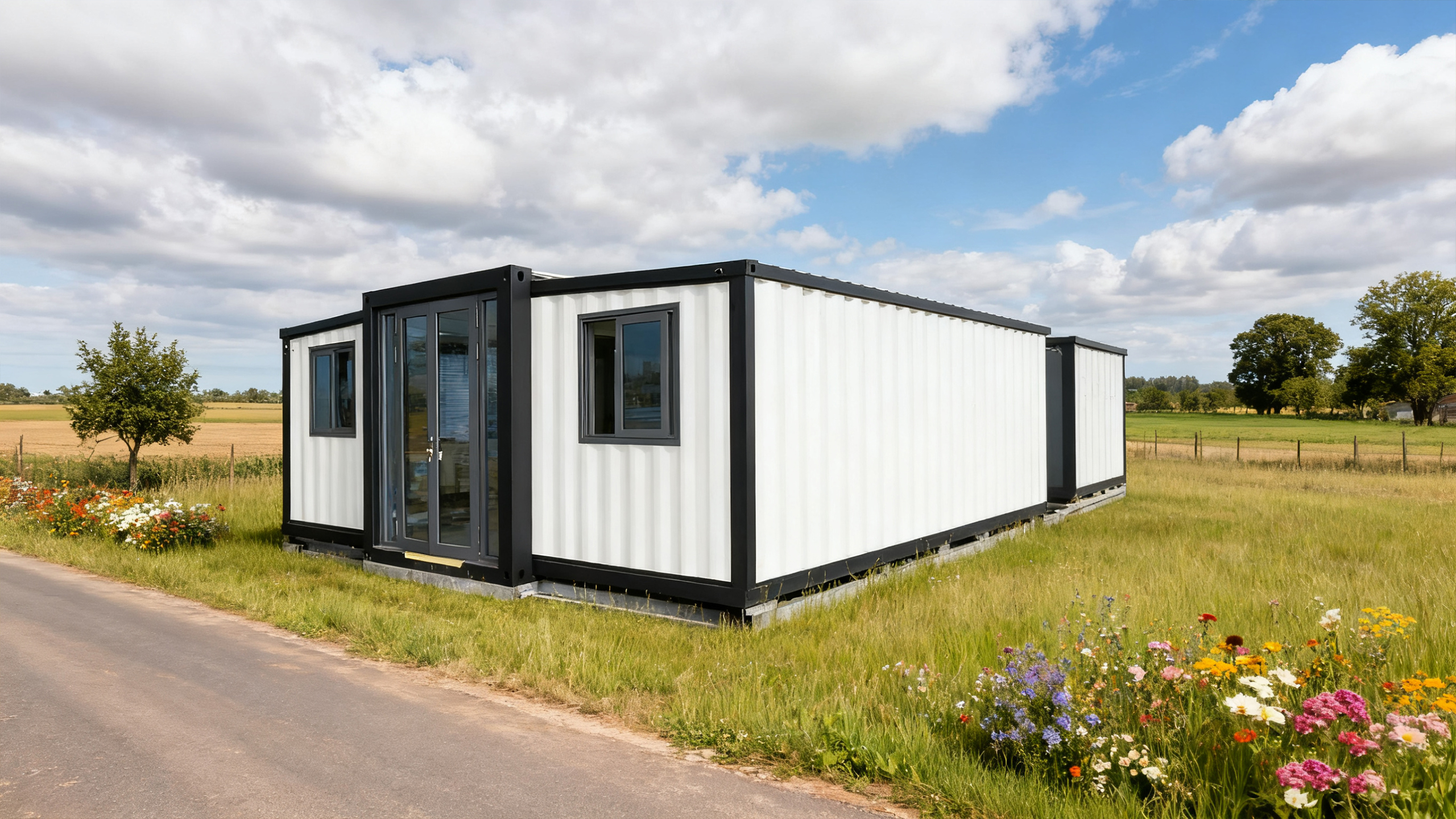
Expandable container units provide significantly larger usable interior space while maintaining efficient transport and rapid on-site deployment.
Common applications include:
Guest accommodation
Reception and front desk buildings
Offices and operational spaces
Staff accommodation
Minimal foundation requirements and fast installation enable hospitality operators to bring essential facilities online quickly, particularly in remote, coastal, mountain, or undeveloped tourism locations. These units are ideal for projects requiring rapid deployment without compromising usable interior space.
Designing Hospitality Spaces as Complete Systems
Hospitality projects require more than individual guest units. Successful tourism developments depend on a coordinated system of guest accommodation, reception areas, operational buildings, staff housing, and utility infrastructure working together seamlessly. Each component plays a role in supporting daily operations, guest experience, and long-term scalability. Planning these elements as an integrated system ensures that the project operates efficiently from the first phase through full expansion.
Modular construction enables developers to deploy hospitality infrastructure strategically based on project priorities and investment phases. Guest accommodation can be installed first to enable early operation, followed by reception buildings, service areas, and staff accommodation as the project expands. This phased deployment approach allows hospitality projects to begin generating revenue while expansion continues, improving cash flow, reducing upfront construction risk, and providing developers with greater flexibility to scale based on actual market demand.
Faster Deployment and Earlier Revenue Generation
Traditional construction methods often delay hospitality project openings due to extended building timelines, weather dependencies, and the need to coordinate multiple on-site construction activities. These delays can push back launch dates, causing developers and operators to miss peak tourism seasons and postpone revenue generation. For hospitality investments, timing is directly linked to profitability, and delays can significantly impact overall financial performance.
Modular construction allows accommodation units and operational buildings to be manufactured in parallel with site preparation and foundation work. Once delivered, installation can be completed rapidly with minimal on-site construction, enabling projects to open much earlier compared to conventional building methods. Developers can prioritize deploying guest accommodation first, allowing initial operations to begin while additional infrastructure is completed in phases.
Earlier operational readiness improves investment efficiency by accelerating cash flow and shortening the time required to reach return on investment. Hospitality operators can begin accepting guests, validating market demand, and generating revenue while continuing to expand the property. This approach reduces financial risk, improves capital utilization, and provides developers with greater flexibility to scale projects based on real-world performance rather than fixed construction timelines.
Expand as Your Project Grows
Start with the capacity you need today and expand as demand grows. Modular systems allow hospitality projects to scale efficiently while maintaining operational continuity and protecting investment performance.
Engineering Support for Tourism & Hospitality Projects
ReachTop provides engineering support specifically adapted to the technical and operational requirements of tourism and hospitality developments. This includes layout planning aligned with site conditions, utility integration for electrical, water, and drainage systems, and structural configurations tailored to the intended use of each building. Whether the project involves beachfront resorts, mountain retreats, eco-tourism destinations, or remote hospitality developments, modular systems can be configured to integrate efficiently with the overall site infrastructure.
Insulation performance, interior finishes, and structural specifications can be customized based on local climate conditions and environmental exposure. This ensures reliable thermal comfort for guests, protects building integrity over time, and supports long-term operational stability. By adapting modular buildings to real environmental conditions, developers can ensure consistent performance, reduced maintenance requirements, and a durable hospitality infrastructure suitable for long-term commercial use.
Start Your Tourism or Hospitality Project with Confidence
Tourism and hospitality projects require reliable deployment, strong visual appeal, and operational flexibility. Our modular systems support developers and operators in creating scalable, efficient, and visually compelling hospitality environments.