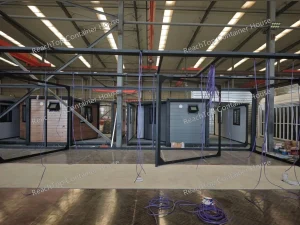

No sensible factory should complete a container house and then dismantle the walls to inspect the concealed work. The correct approach is to inspect and record each critical stage while the components are still visible.
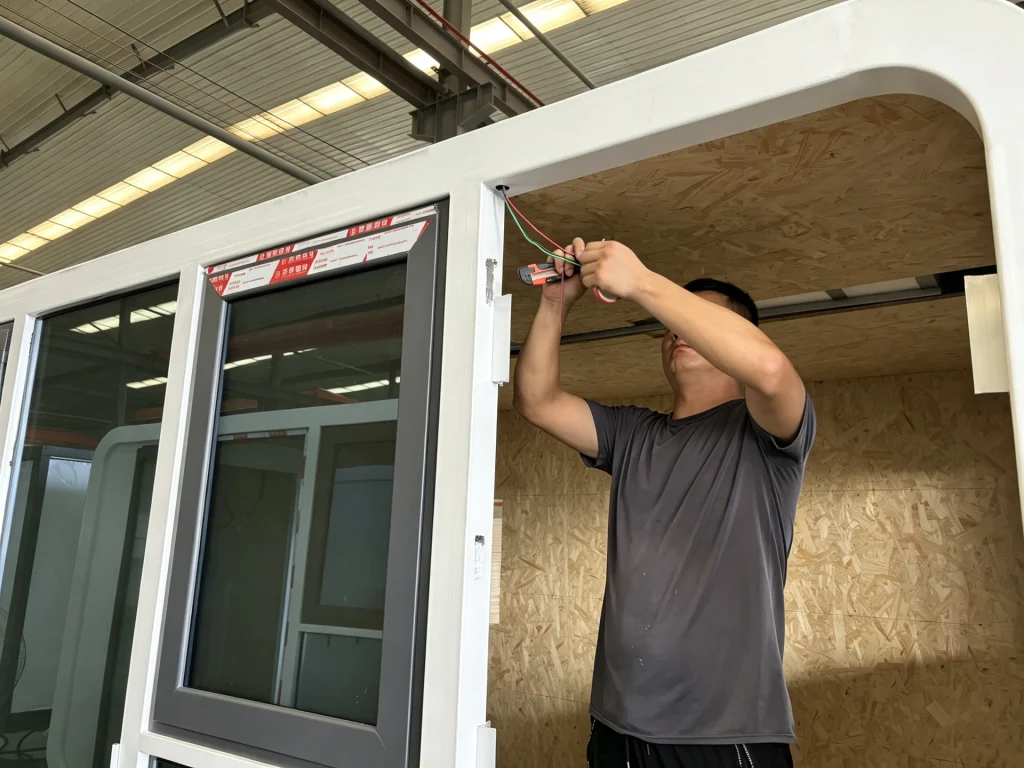
ReachTop creates a production record for every order. Photos and videos are taken at key manufacturing stages, especially before electrical wiring and plumbing are concealed. If a mistake is found, it can be corrected inside the factory instead of becoming an after-sales problem after delivery.
This process is not complicated, but it is valuable to both the factory and the buyer. It makes production more disciplined, gives the buyer clearer evidence and helps keep preventable problems inside the factory.
Each Order Has Its Own Production Record
Container houses are highly customized products. Different orders may use different frame colours, layouts, wall materials, doors, windows, electrical systems and plumbing arrangements.
For this reason, ReachTop does not rely only on generic factory photos. We record the actual units being manufactured for each order.
Inspection records include both close-up and wider views. A close-up shows the material, connection or workmanship. A wider view shows where the component is located within the unit and allows the buyer to compare it with the confirmed layout and configuration.
For projects requiring additional traceability, the order number or project identification can also be included in the inspection records.
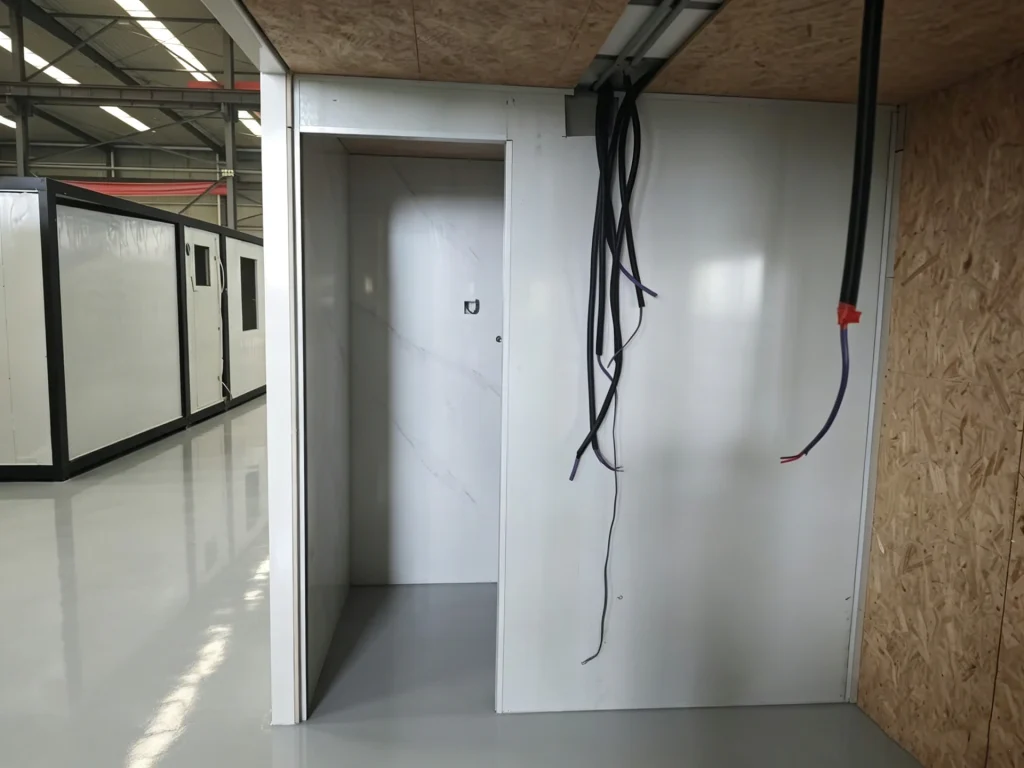
Electrical and Plumbing Work Must Be Checked Before Concealment
Electrical wiring and plumbing require particular attention because they are difficult to access after the walls are closed.
Before concealment, the factory should check that the installed materials and layout match what was agreed with the buyer. Depending on the project, this includes:
- Cable and pipe materials
- Cable and pipe routing
- Switch and power outlet positions
- Lighting connections
- Distribution box position
- Water supply and drainage connections
- Bathroom and kitchen connection points
- Openings for external services
ReachTop records both the components and their positions before they are covered. This helps confirm that the cables, pipes and connections installed in the unit are the ones specified for the order.
Taking photographs alone is not enough. If an error is found, it must be corrected and checked again before production continues.
Request a Final Inspection Video Before Shipment
After production is completed, the buyer can request a clear final inspection video of the actual units.
The video should show the exterior, interior, doors, windows, electrical fixtures, plumbing fixtures, finishes and supplied accessories. Buyers can pause the video and enlarge individual areas to inspect visible details.
If dirt or manufacturing marks remain, they can be cleaned. If welding residue or an unfinished coating area is visible, it can be treated and refinished. If a fixture or accessory is incorrect, it can still be replaced.
Before shipment, these corrections are usually simple. After the container house has arrived overseas, the same issue may require local labour, replacement materials and lengthy communication.
Packaging Also Needs to Be Inspected
A correctly manufactured container house can still be damaged during international transportation if it is not properly protected and secured.
ReachTop experienced transportation-related after-sales cases during its earlier export work. Compensation was provided, but the result was still unpleasant for both sides. Compensation cannot recover lost time or prevent a project delay.
Before loading, the buyer can request photos of the packaging and loading condition. Important points include:
- Protection of corners and finished surfaces
- Securing doors, windows and movable components
- Separate packaging for loose accessories
- Protection of glass and other vulnerable parts
- Prevention of movement and contact during transportation
- Final loading condition before the shipping container is closed
Where the product or transportation route requires it, additional packaging reinforcement should be discussed before shipment.
Keep Preventable Problems Inside the Factory
Factory inspection should not be limited to a final look at the finished container house. The most important checks take place while the structure, wiring and plumbing are still visible.
By recording every critical stage, correcting errors before concealment and allowing the buyer to inspect the finished unit and packaging before shipment, many after-sales problems can be prevented.
The purpose of these records is not to produce more photos. It is to leave fewer problems for the buyer to solve after delivery.