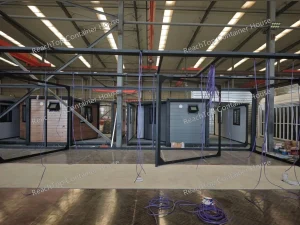

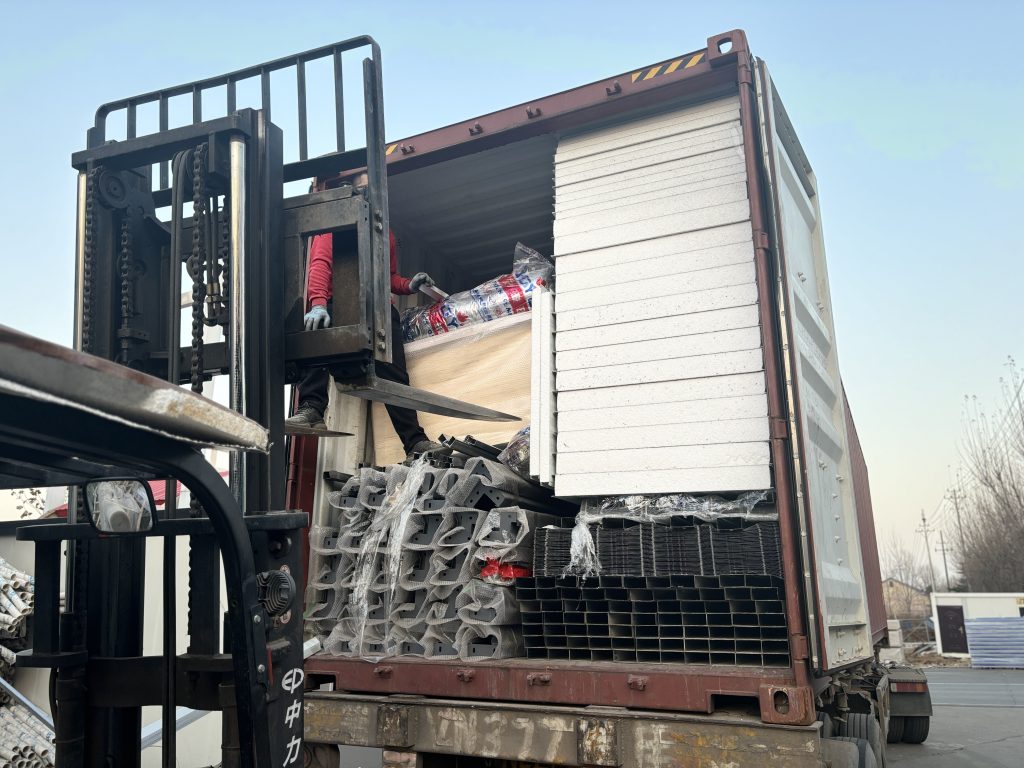
A 40HQ container can normally load about 14–18 complete sets of detachable container houses. ReachTop generally uses 17 sets per 40HQ as the preliminary reference for a standard configuration. The final quantity depends on total weight, frame specifications, wall panels, bathrooms, additional roof components and the packing arrangement.
You may have noticed that different ReachTop pages provide slightly different loading figures.
Some pages indicate that a 40HQ container can load 16–17 sets of detachable container houses, while others show 17–18 sets.
These figures are not necessarily contradictory.
Unlike an integrated modular building, a detachable container house is shipped as separate structural components. The final loading quantity therefore changes according to the selected configuration, total weight, packaging method and the way each component is arranged inside the shipping container.
This article supplements our Detachable Container House product page by explaining why the loading capacity can range from 14 to 18 sets.
The same explanation also applies to many detachable container houses supplied by other manufacturers in China.
Table of Contents
Why Can a 40HQ Load Between 14 and 18 Detachable Container Houses?
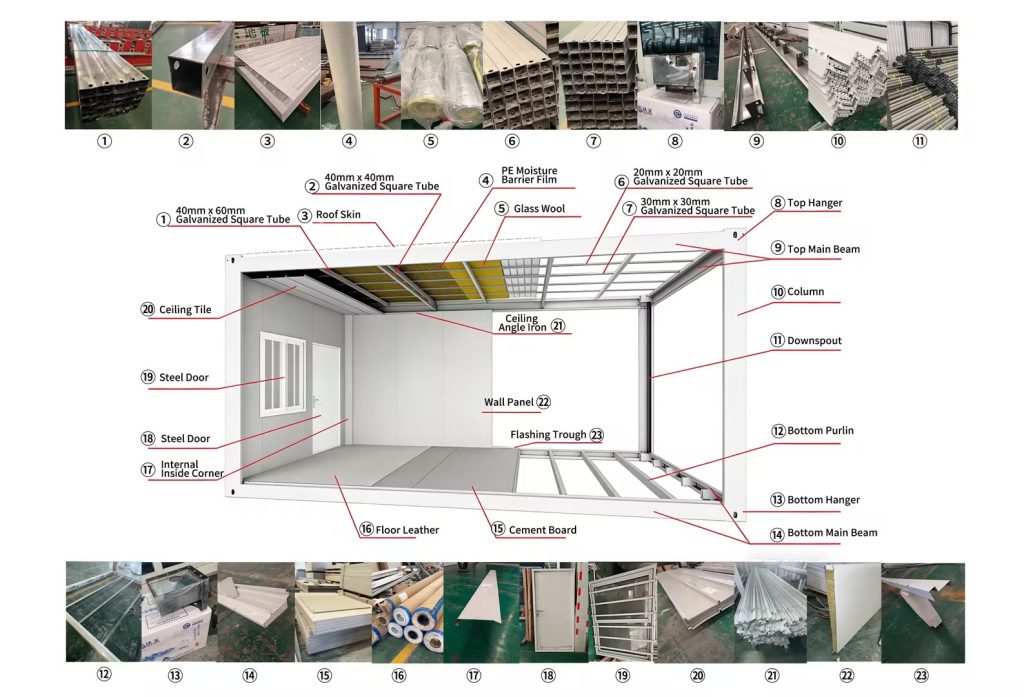
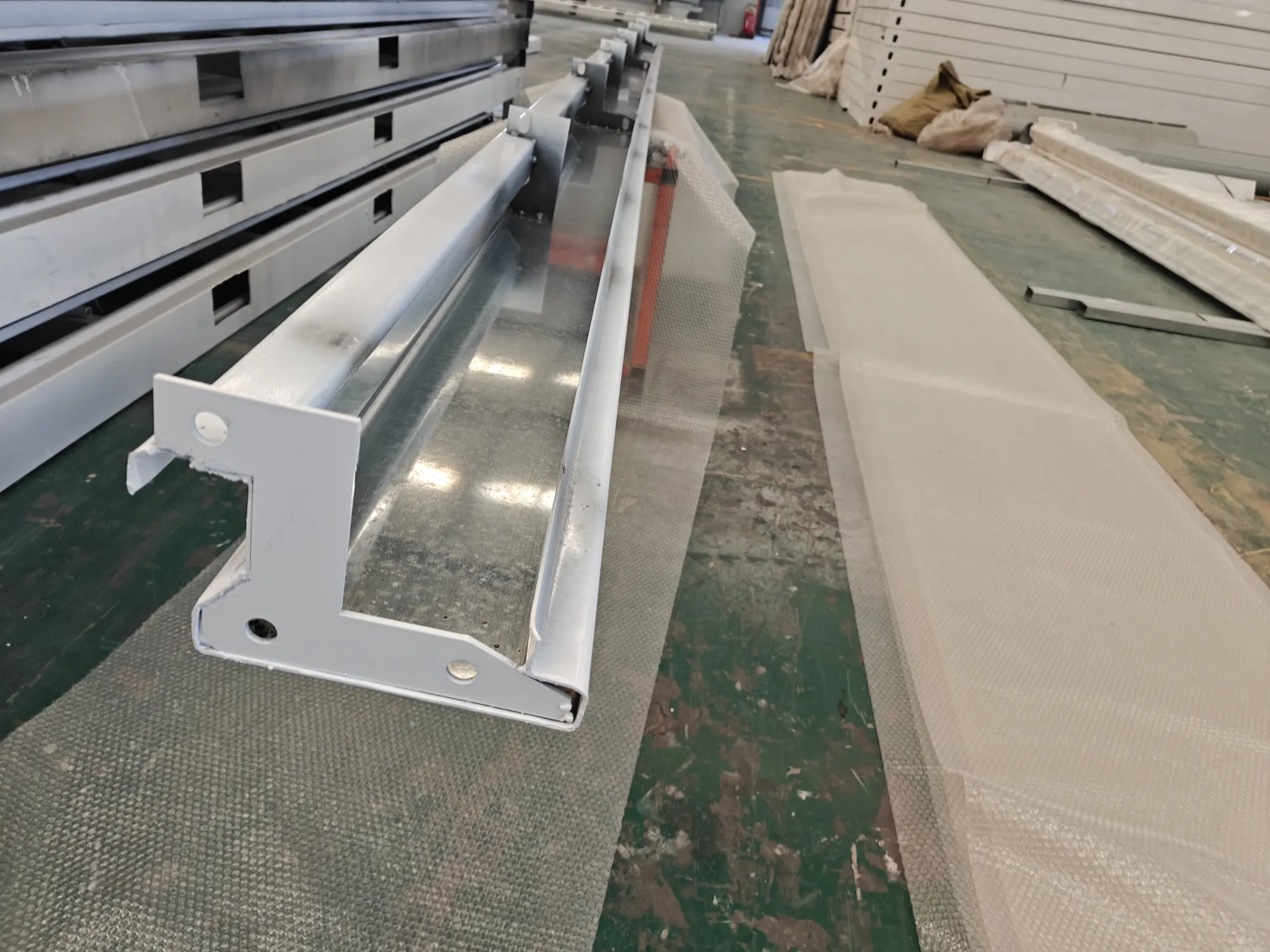
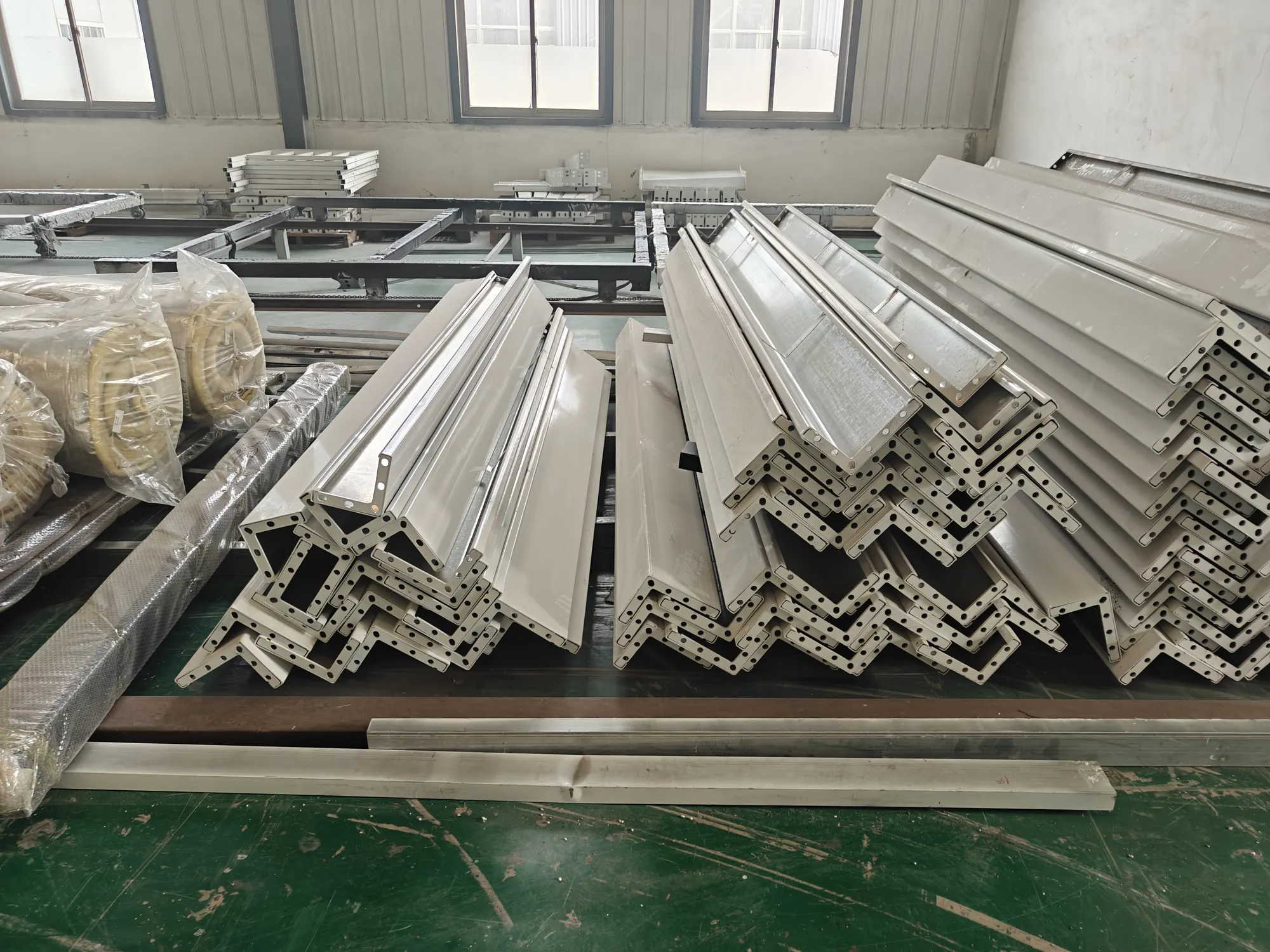
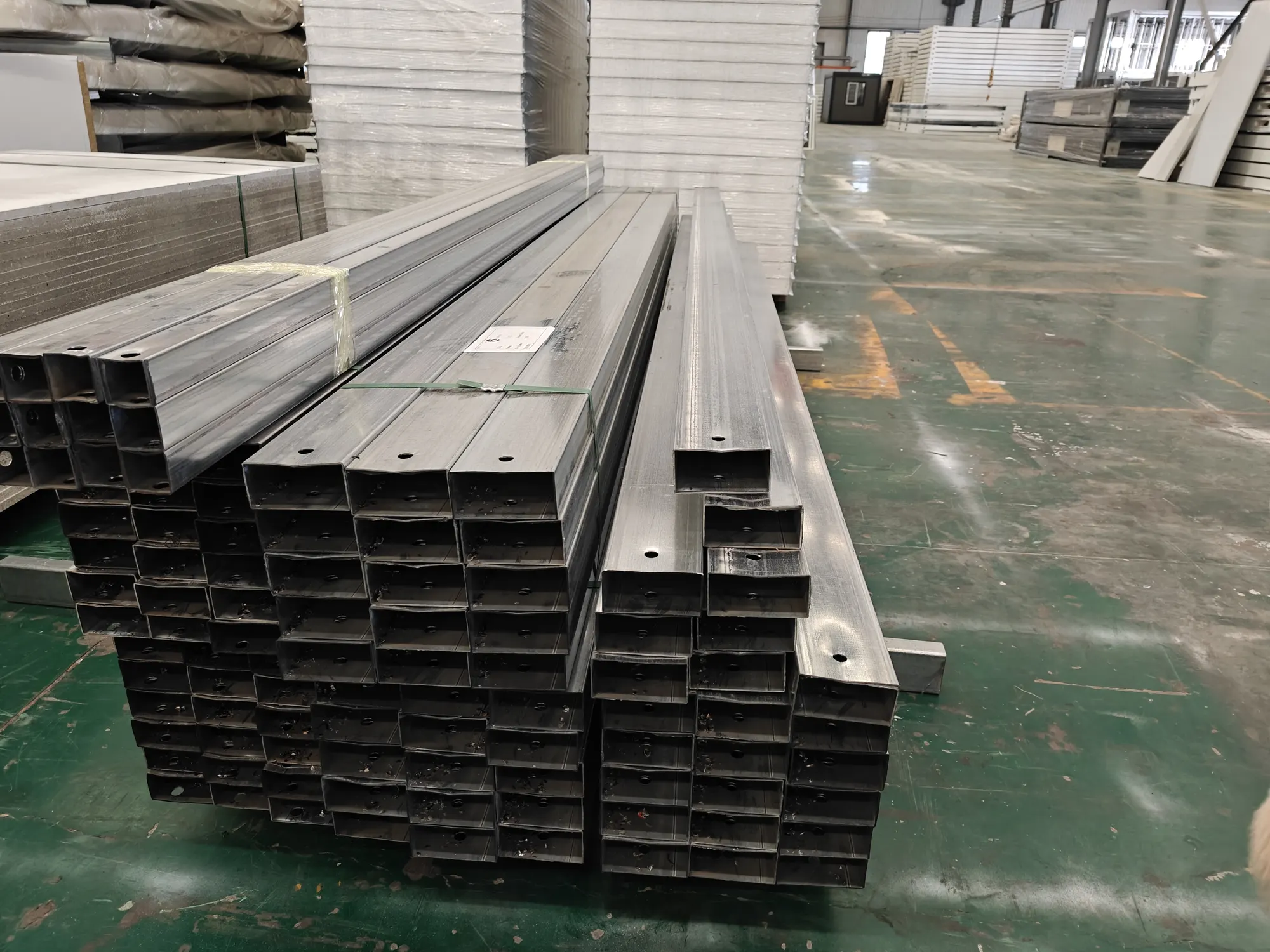
A detachable container house is shipped as a complete kit of separate components.
A typical shipment may include:
- Top and bottom frame components
- Columns and connection parts
- Wall and roof panels
- Doors and windows
- Floor materials
- Electrical components
- Plumbing components
- Bathroom materials
- Sealants, screws and installation accessories
- Additional roof, staircase or corridor components
Changing any of these items can affect the total volume or weight of the shipment.
This is why “17 sets per 40HQ” should be understood as a standard planning reference rather than a fixed figure for every order.
Frame Specifications and Total Weight
Common frame specifications may include:
- 1.6 mm for basic, price-sensitive configurations
- 2.0 mm for entry-level project use
- 2.3 mm or 2.5 mm for standard configurations
- 3.0 mm for more demanding or multi-storey projects
- 4.0 mm for specially reinforced structural requirements
Frame thickness primarily affects total weight rather than packing volume when the external dimensions of the steel profiles remain unchanged.
However, thicker configurations may also include larger profiles, additional reinforcement, heavier corner components or more connection parts. These changes can affect both the weight and the packing arrangement.
The supplier must consider:
- The total cargo weight
- The permitted payload shown on the container plate
- Shipping-line requirements
- Local road transportation limits
- Weight distribution inside the container
- Safe unloading at the destination
Therefore, a heavier three-storey configuration may load fewer complete sets than a standard single-storey configuration, even when the individual components look similar.
Wall Panel and Insulation Thickness
Wall panels affect both volume and weight.
A basic detachable container house may use relatively thin EPS sandwich panels, while other projects may require:
- Thicker EPS panels
- Rock wool sandwich panels
- PU insulation
- Additional interior wall panels
- Exterior decorative panels
- Fire-performance upgrades
- Climate-specific insulation systems
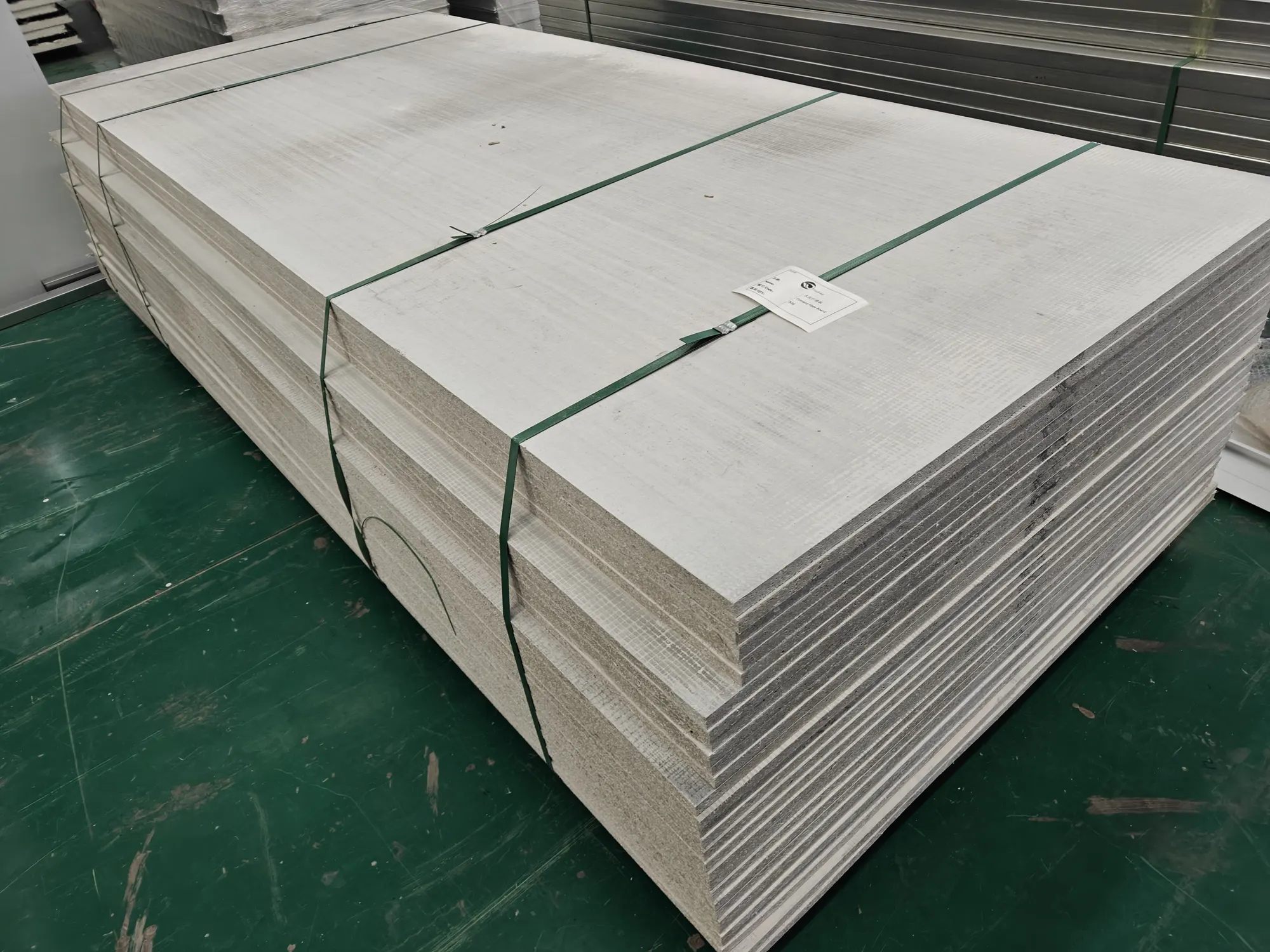
Thicker wall panels occupy more space when stacked. Rock wool and upgraded composite wall systems may also weigh more than standard EPS panels.
If additional wall panels are included for internal partitions, bathrooms, corridors or replacement purposes, the total packing volume increases further.
As a result, two orders containing the same number of houses may require different numbers of shipping containers.
Bathrooms, Roofs and Additional Components
A detachable container house supplied as a basic structural unit occupies less space than a fully configured building.
Additional components may include:
- Bathroom wall panels
- Toilets, washbasins and shower fittings
- Plumbing and drainage components
- Kitchen cabinets
- Additional roof systems
- External staircases
- Walkways and corridors
- Canopies
- Internal partitions
- Spare wall panels
- Replacement doors and windows
These items must be included in the packing plan.
Some components can be placed inside unused spaces between structural parts. Others require separate protective packaging and may occupy a significant part of the container.
This is one reason a basic order may load 18 sets, while an upgraded order may load only 14–16 sets.
Why Do Suppliers Give Different Loading Figures for the Same Product?
Buyers sometimes receive quotations for apparently identical detachable container houses but are given different loading quantities.
One supplier may quote 16 sets per 40HQ, another may quote 17, and a third may claim that 18 sets can be loaded.
There are several reasons for this difference.
Why Detachable Container Houses from Different Suppliers Often Look the Same
Detachable container houses are highly standardized products.
Buyers often notice that products from different Chinese suppliers look almost identical. In some cases, even the product photographs, structural drawings and floor plans appear to be the same.
This does not necessarily mean that all these suppliers are the same company.
Image reuse remains common in the container house industry, partly because brand and image protection have historically received limited attention. More importantly, many manufacturers produce houses based on similar structural dimensions and market-standard designs.
However, similar appearance does not mean that every product is identical.
Differences may exist in:
- Steel profile dimensions
- Material thickness
- Corner and connection components
- Roof drainage design
- Wall panel dimensions
- Door and window specifications
- Floor materials
- Electrical and plumbing systems
- Packing protection
- Installation accessories
These differences are difficult to identify from images, and they likewise affect the quality of detachable container houses — refer to “What Determines the Quality of a Detachable Container House?” for details.
Small dimensional differences can also change how efficiently the components can be stacked and arranged inside a 40HQ container.
How Packing Design Affects Container Capacity
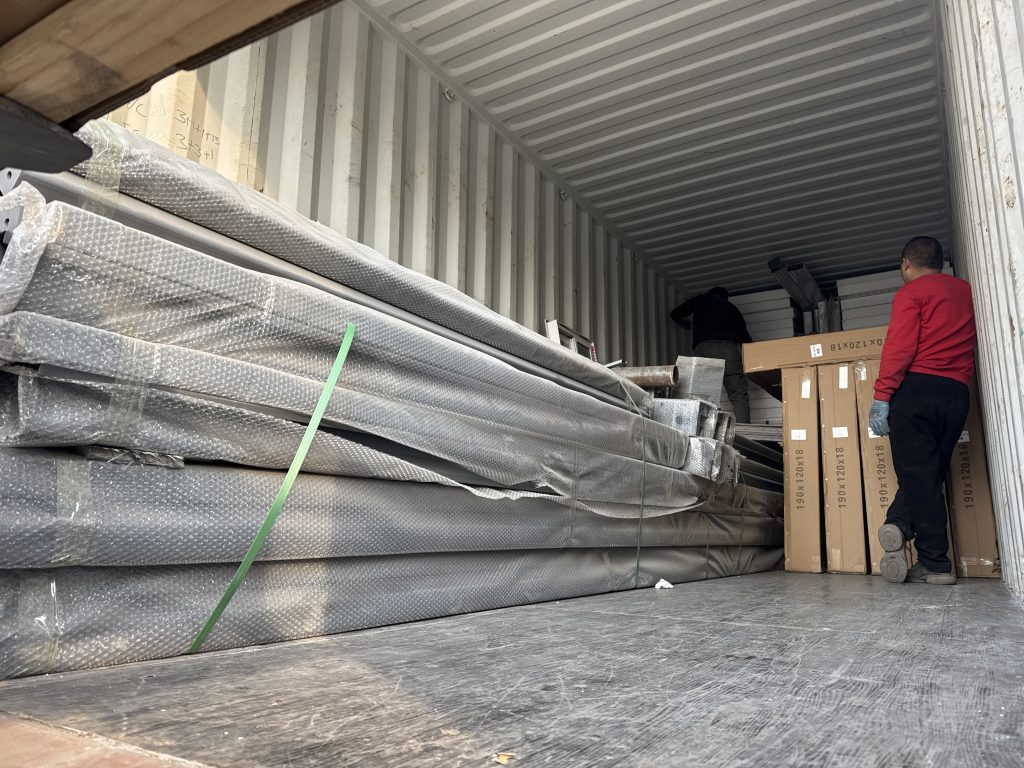
Because detachable container houses are shipped as separate components, the supplier must design the loading arrangement carefully.
Questions that must be considered include:
- Where should the doors and windows be placed?
- How should the wall panels be stacked and protected?
- Where should the columns and connection components be positioned?
- Can bathroom components be placed inside frame openings?
- How should the weight be distributed?
- Which items need to be unloaded first?
- Can fragile components be removed without moving the entire shipment?
A well-designed loading plan makes efficient use of the practical loading space while protecting the materials and maintaining safe weight distribution.
Loading efficiency is not simply about placing as many components as possible inside the container.
The components must also arrive without unnecessary damage and remain reasonably accessible during unloading.
In our experience, a carefully planned arrangement can use most of the practical container capacity. A poorly planned shipment may leave a significant amount of usable space—sometimes 20–30%—unused.
This is why two suppliers offering a similar product and configuration may still provide different loading quantities.
Why We Use 17 Sets per 40HQ as Our Standard Reference
When the final project configuration has not yet been confirmed, ReachTop normally uses 17 sets per 40HQ as the preliminary loading reference for a standard detachable container house.
This figure is practical for early-stage discussions because it helps buyers estimate:
- The approximate number of shipping containers required
- Preliminary ocean freight per unit
- Total project logistics costs
- The approximate delivery schedule
- Port handling and local transport requirements
However, 17 sets is not a guaranteed quantity for every configuration.
Before confirming the final loading quantity, we need to know:
- Required frame thickness
- Steel profile dimensions
- Wall panel type and thickness
- Insulation material
- Number of internal partitions
- Bathroom configuration
- Additional roof components
- Doors and windows
- Staircases and corridors
- Spare materials and replacement parts
After the configuration is confirmed, ReachTop prepares a bill of materials, packing list and loading plan.
Depending on the final specification, one 40HQ may load 14, 16, 17 or 18 complete sets.
Any loading quantity provided before the configuration is finalized should therefore be treated as an estimate rather than a fixed promise.
How ReachTop Confirms the Final Loading Quantity
The final loading quantity is normally confirmed through the following process.
1. Confirm the Product Configuration
We first confirm the structure, wall panels, doors, windows, electrical system, plumbing system and additional components.
2. Prepare the Bill of Materials
Every component included in one complete house is listed, including structural parts, panels, accessories and spare materials.
3. Calculate the Total Volume and Weight
The total packing volume and estimated gross weight are calculated according to the confirmed order quantity.
4. Design the Packing Arrangement
Frames, columns, panels, doors, windows and accessories are grouped according to their dimensions, weight and unloading sequence.
5. Check Container and Transportation Limits
The loading plan is checked against the container payload, shipping requirements, weight distribution and practical unloading conditions.
6. Confirm the Final Quantity
Only after these steps can the number of complete sets per 40HQ be confirmed with reasonable accuracy.
For this reason, the final loading quantity is usually confirmed together with the approved configuration and packing list rather than during the first general enquiry.
What Buyers Should Confirm Before Comparing Loading Quantities
Loading capacity should not be compared as an isolated number.
Before comparing a quotation based on 16 sets with another based on 18 sets, confirm whether both suppliers are including the same materials and components.
Check the following information:
| Item | What to Confirm |
|---|---|
| Frame | Profile dimensions, steel thickness and reinforcement requirements. |
| Wall Panels | Panel material, thickness, dimensions and total quantity. |
| Insulation | EPS, rock wool, polyurethane or another project-specific insulation system. |
| Bathroom | Whether bathroom wall panels, plumbing components and sanitary fixtures are included. |
| Roof | Standard container roof or an additional roof system for improved drainage and protection. |
| Internal Partitions | The number, dimensions and material specifications of internal wall panels. |
| Doors and Windows | Quantity, dimensions, frame material, glazing and protective packaging. |
| Accessories | Screws, sealants, flashing, electrical cables, plumbing parts and installation materials. |
| Spare Materials | Additional wall panels, doors, windows, sealing materials or maintenance parts. |
| Packing | Protective packaging, component arrangement, weight distribution and unloading sequence. |
| Total Weight | Estimated gross cargo weight and applicable container or transportation limits. |
| Loading Quantity | Whether the stated quantity is a preliminary estimate or a confirmed packing plan. |
A supplier claiming a higher loading quantity may be using a more efficient packing method.
However, it may also mean that fewer materials, thinner specifications or fewer accessories are included.
The loading figure only becomes meaningful after the configuration scope has been confirmed.
Frequently Asked Questions
Is 18 Sets per 40HQ Always Better Than 16 Sets?
No. A higher loading quantity may reduce the ocean freight cost per unit, but buyers must first confirm whether the structure, wall panels, bathrooms, accessories and spare materials are the same.
Loading more units is not automatically evidence of better product quality or better service.
Why Can Some Projects Load Only 14 Sets?
A 14-set loading plan may involve heavier frames, thicker wall panels, additional bathrooms, external roofs, staircases, corridors or other project-specific components.
The lower number may reflect a more complete or reinforced configuration.
Does a Thicker Frame Always Reduce the Loading Quantity?
Not necessarily.
If the external profile dimensions remain unchanged, greater steel thickness primarily increases weight rather than volume. The loading quantity may decrease when the heavier structure approaches payload limits or when additional reinforcement changes the packing arrangement.
Can the Loading Quantity Change After the Quotation?
Yes, if the buyer changes the configuration.
Adding bathrooms, upgraded wall panels, extra partitions, roofs, staircases or spare materials may change the final loading plan.
The supplier should reconfirm the quantity before production and shipment.
How Should Ocean Freight per House Be Calculated?
The basic ocean freight per house can be estimated by dividing the container freight by the number of complete sets loaded.
However, buyers should also consider:
- Origin charges
- Destination port charges
- Customs clearance
- Import duties and taxes
- Local transportation
- Container unloading
- Installation costs
A higher loading quantity can reduce freight per unit, but it does not remove these additional costs.
Conclusion
A 40HQ container can normally load between 14 and 18 detachable container houses.
ReachTop uses 17 sets per 40HQ as the standard preliminary reference when the buyer has not yet confirmed the complete project configuration.
However, 17 sets is a planning figure—not a universal rule.
The final quantity depends on the total volume, gross weight, structural specification, wall panels, bathrooms, additional components and the supplier’s packing design.
Before comparing loading figures from different suppliers, buyers should first confirm whether the quotations include the same product configuration.
A promise of “18 sets per 40HQ” has little value unless the supplier can also explain what is included, how the cargo will be protected and how the final loading plan was calculated.
To receive an accurate loading estimate, send ReachTop your required quantity, frame specification, wall panel configuration, bathroom requirements and additional components. Our team will prepare a project-based packing and shipping recommendation.