
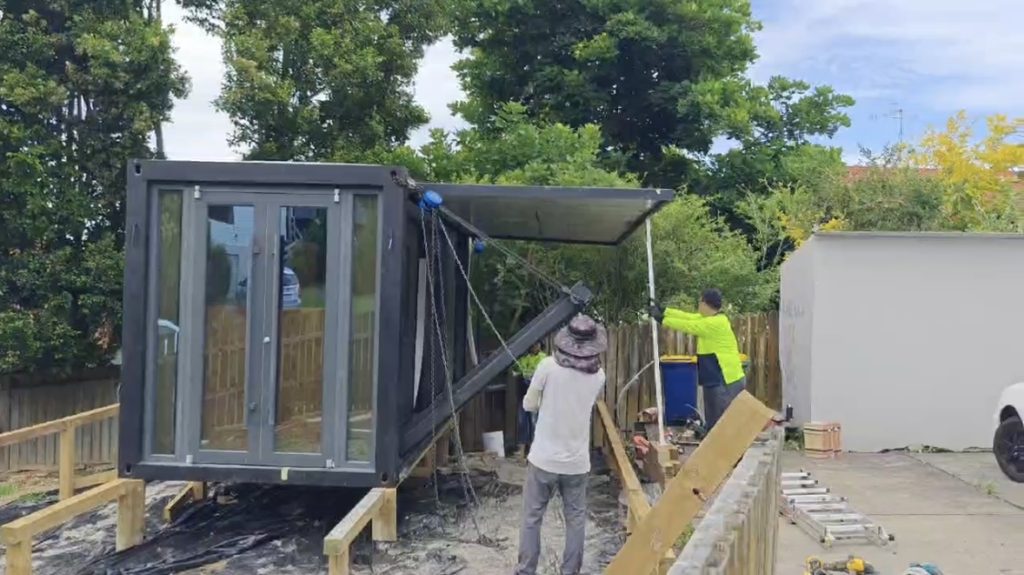
You can find expandable container house suppliers through Google, B2B platforms and social media.
Finding a factory is not difficult. Buying an expandable container house is not difficult either.
The difficult part is finding a reliable supplier, buying the house you actually need, completing every step properly and ending with a pleasant transaction.
Expandable container houses are not completely standard products.
Most buyers customise the layout, materials and configuration according to their preferences, intended use, climate and site conditions.
ReachTop has prepared several popular models and layouts, but they are only reference options. Around 90% of the expandable container house orders sold by ReachTop are customised rather than standardised.
That is why you need a supplier and sales representative who can communicate clearly with you.
What Type of Expandable Container House Do You Need?
How Much Space Do You Need?
The approximate expanded floor areas are:
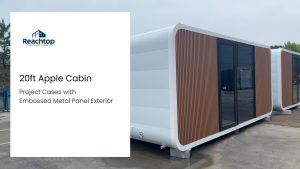
- 20ft expandable container house: about 37 m²
- 30ft expandable container house: about 56.7 m²
- 40ft expandable container house: about 74 m²
You should also decide whether you need an internal height of 2.4 metres.
A standard expandable container house normally has an internal height of approximately 2.2 metres in the centre and 2.1 metres on both sides.
Only a flat-roof expandable container house normally provides an internal height of about 2.4 metres across the full interior.
Do You Need a Basic, Premium or Approval-Ready House?
The price difference between a basic configuration and a premium residential configuration of the same size may be close to 100%.
If you only need temporary space, a basic model may be enough.
It saves time and money and is a practical choice for temporary accommodation, site offices or additional short-term space.
However, we still recommend adding a full additional roof.
A low-cost house from an unqualified supplier may develop roof leakage. A full roof physically blocks rainwater before it reaches the original folding roof and greatly reduces this risk.
For temporary use, a basic 20ft expandable container house with a full roof may cost approximately US$6,000–7,000 EXW, depending on the final configuration.
A basic house with insulation, wind protection, rain protection and a full additional roof is already sufficient for many temporary applications.
The situation is different if you want a premium expandable house with a better living experience.
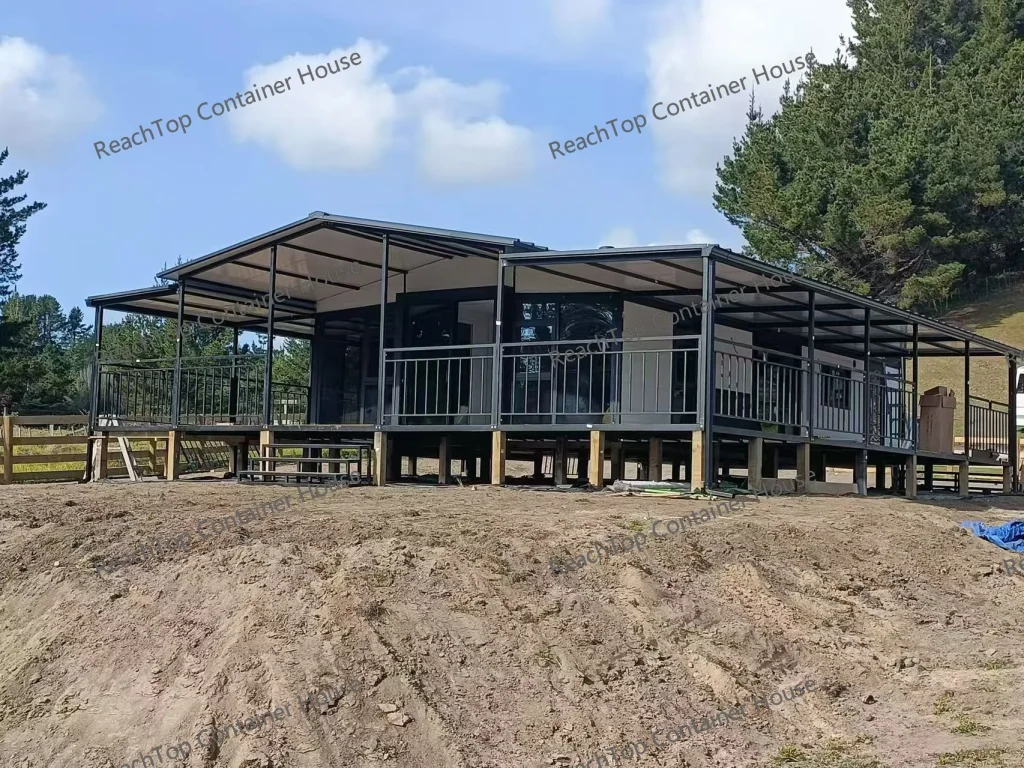
You may need upgraded windows, wall panels, bathroom finishes, kitchen cabinets, interior decoration, exterior cladding, an additional roof and other options.
At this point, supplier selection becomes more important.
You need a clear and professional sales engineer who can prepare a suitable solution instead of simply adding every available option.
If the house must obtain local building approval, you need to screen suppliers even more carefully.
The supplier should have experience supporting approval projects and an internal technical team capable of providing drawings, specifications and technical information.
You may also need to involve a local architect or engineer.
The supplier provides technical support, while the approval process is normally completed locally.
Confirm the Configuration Attached to the PI
Different suppliers may quote different prices for a similar expandable container house.
That is normal.
The same dish can have different prices in different restaurants.
What matters is whether the configuration list supplied with the Proforma Invoice, or PI, matches what you agreed during the discussion.
Carefully check:
- House size
- Layout
- Wall panels
- Windows and doors
- Bathroom
- Kitchen
- Electrical system
- Plumbing system
- Interior finishes
- Exterior finishes
- Additional roof
- Terrace
- Accessories
- Colours
If anything is different, ask the supplier to correct it before payment.
Some sales representatives may overlook this step. New sales staff may also fail to update the configuration list correctly.
An experienced salesperson may remember the final agreement when preparing the production order, but a new salesperson may send an outdated configuration to the factory.
Therefore, whether your contact is experienced or new, the configuration list must match the final agreement.
Do not rely only on chat history or verbal confirmation.
Confirm Whether the Price Is EXW, FOB, CIF or DDP
EXW
The house is delivered at the factory.
The buyer is responsible for transportation from the factory, export arrangements, ocean freight, import clearance and local delivery.
FOB
The supplier transports the house to the Chinese port and completes the export procedures.
The buyer is responsible for ocean freight and all costs after arrival at the destination port.
CIF
The supplier arranges ocean freight and insurance to the destination port.
CIF does not mean delivery to the project site.
Destination port charges, import duties, customs clearance, local transportation, crane work and installation are normally not included.
DDP
DDP can include delivery to the buyer’s address.
However, DDP service is only available for some destinations and is usually expensive.
If DDP is available and the total price is acceptable, it can be considered.
What You Need to Complete Before and After Buying
Before confirming the order, you should agree with the supplier on:
- Layout drawings
- Renderings, if required
- Final configuration list
- Electrical standard
- Plumbing standard
- House colour
- Installation scope
- Trade terms
- Delivery schedule
You should also prepare the land and foundation before the house arrives.
After delivery, a crane is required to remove the folded house from the shipping container.
A forklift and crane are then used together to place the house on the prepared foundation.
After the house is expanded, follow the installation manual and videos provided by ReachTop to:
- Fix the wall panels and structure
- Install the rubber strips at the folding joints
- Apply waterproof tape
- Complete the internal trim where required
- Connect the prefabricated electrical interface
- Connect the water inlet and drainage outlets
- Connect the sewage outlet
- Install the additional roof or terrace, if included
Finding a supplier is easy.
The important part is confirming what you need, checking every document and completing the work before and after delivery.
The safest order is not always the cheapest one.
It is the order in which every important detail has been confirmed before production begins.