
Insulation performance is not decided by one single material.
For an expandable container house, thermal comfort is a system. The insulation material plays a leading role, but it is not the only factor. Windows, roof structure, wall panels, sealing details, interior finishes, exterior cladding and even the air conditioning system can all affect the final living experience.
This article mainly discusses the insulation performance of expandable container houses. However, the same logic can also be used as a reference for other modular buildings, including detachable container houses, flat pack container houses, capsule houses and prefabricated cabins.
A good insulation system is not just about keeping the room warm in winter or cool in summer. It also affects noise reduction, condensation control, long-term comfort, energy consumption and maintenance cost.
Why Is the Insulation System So Important for Container Houses?
The reason is simple: people are not looking for an iron tent.
A container house may be built with a steel frame, but the final living experience should be much closer to a real room than to a temporary metal shelter. If the insulation system is weak, the indoor temperature will change quickly with the outside weather. In hot climates, the room may become uncomfortable during the day. In cold or humid climates, condensation may appear on cold surfaces, especially around metal parts, windows and roof joints.
A proper insulation system can help improve:
- Indoor temperature stability
- Cooling and heating efficiency
- Sound insulation
- Condensation control
- Long-term comfort
- Wall and roof durability
- Overall project value
This is why insulation should not be treated as a small optional upgrade. For residential use, hospitality projects, worker accommodation, camps and long-term commercial use, it is one of the most important parts of the whole building system.
How to Choose the Right Insulation Material
The most common insulation materials used in modular container houses include EPS, PU and rock wool. In some projects, buyers may also see bamboo fiber interior panels, polyurethane edge-sealed panels, decorative sandwich panels or other composite wall systems.
But insulation is not as simple as asking, “How thick is the wall panel?”
Thickness is important, but it is not the whole answer. Density, panel structure, production quality, joint sealing, surface material and installation method also matter. Two panels with the same thickness may perform differently if their density, core material or bonding process is different.
That is why ReachTop does not recommend judging insulation only by thickness. For expandable container houses, we usually recommend EPS or PU, depending on the project budget, climate and usage scenario.
Here is a simplified comparison for common insulation options:
| Insulation Option | Typical Thermal Performance | Strengths | Limitations | ReachTop Recommendation |
|---|---|---|---|---|
| EPS Sandwich Panel | Good | Cost-effective, lightweight and stable. Provides good panel support for standard expandable container houses. | Lower insulation performance than PU at the same thickness. | Recommended for standard expandable container house projects. |
| PU Sandwich Panel | Very Good | Better thermal insulation, suitable for higher-end residential, rental, hospitality and long-term use projects. | Higher cost than EPS. | Best choice if the project budget allows. |
| Rock Wool Panel | Good | Good fire resistance and sound insulation. Commonly used in many prefabricated buildings. | Softer core and weaker panel support for some expandable structures. Quality and density should be checked carefully. | Not our first choice for expandable container houses. |
| Bamboo Fiber Interior Panel | Limited as primary insulation | Improves interior finish, surface quality and living comfort. | Should not be treated as the main insulation layer. | Useful as an interior finish upgrade. |
| Extra Interior + Exterior Wall Finish | Depends on the full system | Helps improve comfort, appearance, wall protection and long-term durability. | Adds cost, weight and configuration complexity. | Recommended for long-term residential, commercial and hospitality projects. |
For buyers, the real question is not only “Which material has the best insulation number?” The better question is:
Which material is suitable for this structure, this climate, this budget and this project life cycle?
EPS vs PU: Comparing Insulation Performance with Numbers
At the same thickness, closed-cell PU provides greater thermal resistance than standard white EPS. R-value describes that resistance: a higher number means less heat passes through the insulation layer for the same temperature difference.
The following theoretical insulation-layer R-values use R = thickness (m) ÷ thermal conductivity, with reference conductivities of 0.038 W/(m·K) for EPS and 0.026 W/(m·K) for closed-cell PU.
| Insulation layer | Insulation thickness | Reference conductivity λ [W/(m·K)] | Theoretical R-value [m²·K/W] |
|---|---|---|---|
| White EPS | 50 mm | 0.038 | 1.32 |
| White EPS | 75 mm | 0.038 | 1.97 |
| White EPS | 100 mm | 0.038 | 2.63 |
| Closed-cell PU | 50 mm | 0.026 | 1.92 |
| Closed-cell PU | 75 mm | 0.026 | 2.88 |
| Closed-cell PU | 100 mm | 0.026 | 3.85 |
Using these reference values, PU provides approximately 46% more material thermal resistance than EPS at the same thickness. A 50 mm PU layer gives approximately the same thermal resistance as 73 mm of EPS.
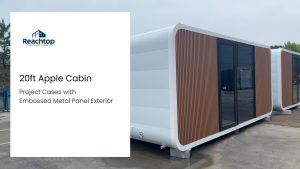
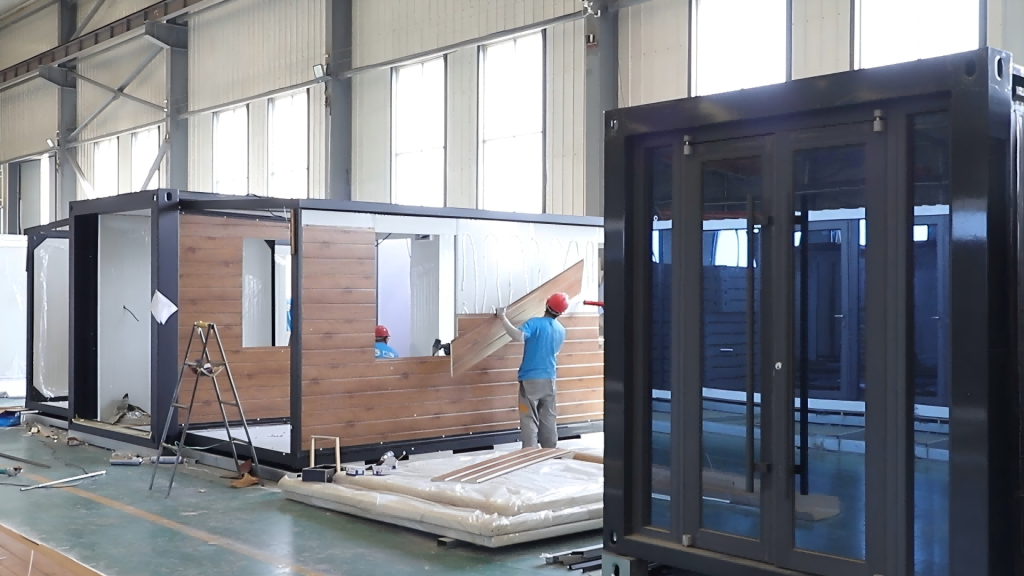
In ReachTop’s upgraded EPS wall configuration, 50 mm EPS sandwich panels are paired with 20 mm embossed metal cladding outside and decorative panels inside. The exterior cladding combines an embossed metal facing, a thin PU insulation core and a backing layer. Its PU core contributes additional thermal resistance, while the EPS remains the main insulation layer.
For the PU wall configuration, 50 mm PU main insulation is paired with 20 mm embossed metal cladding. This is a different wall construction from the upgraded EPS version.
Why Not Choose Rock Wool for Expandable Container Houses?
PU and rock wool may look close in some insulation comparisons, but insulation performance is not the only consideration.
For expandable container houses, the wall panel is not just a thermal layer. It also works as part of the overall structure after the house is unfolded and fixed. The panel needs to provide enough stiffness, support and stability during transportation, unfolding and daily use.
Compared with rock wool, EPS and PU panels usually provide better panel integrity and support for expandable container house structures. This is one of the reasons why ReachTop prefers EPS or PU for expandable models.
Rock wool has its own advantages. It is widely used in many prefabricated buildings because of its fire resistance and acoustic performance. But for expandable container houses, especially models that need repeated transportation, unfolding and installation, the overall panel structure is more important than one single insulation number.
There is also a purchasing detail that many buyers ignore. For fiber-based insulation materials, buyers should check the quality certificate, density, fire rating and safety report carefully. Modern qualified rock wool is generally different from asbestos materials, but low-cost or unclear-source insulation products should still be avoided for long-term residential projects.
In short, ReachTop does not say rock wool is always bad. It is simply not our first recommendation for expandable container houses.
Windows and Doors Also Affect Insulation Performance
Many buyers focus only on wall panels and forget the windows.
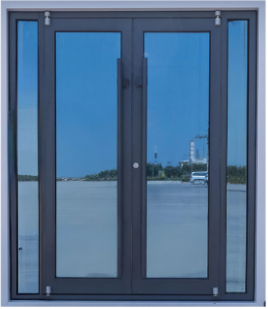
In reality, windows and doors are often the weak points of a building envelope. Even if the wall panel uses a good insulation material, low-quality windows can still allow too much heat transfer, air leakage and condensation.
For modular container houses, the window system can affect:
- Heat loss in cold climates
- Heat gain in hot climates
- Indoor condensation risk
- Noise reduction
- Air leakage
- Overall comfort
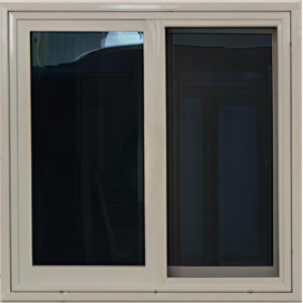
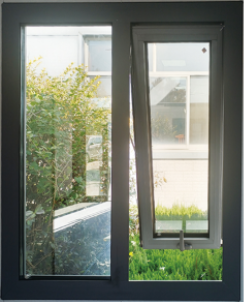
For basic temporary use, standard aluminum windows may be acceptable. But for long-term residential, hospitality or commercial projects, ReachTop recommends upgrading to broken bridge aluminum windows with double glazing.
For example, a 5+12A+5 double-glazed window can provide better thermal and acoustic performance than a simple single-glass window. The air gap between the glass layers helps reduce heat transfer, while the broken bridge aluminum frame reduces the thermal bridge effect through the metal frame.
This upgrade is especially valuable in Australia, New Zealand, Europe, North America and other markets where buyers care more about comfort, noise reduction and long-term energy performance.
The Roof Is Another Critical Part of the System
For expandable container houses, the roof should never be ignored.
In hot climates, the roof receives strong sunlight for many hours every day. In rainy climates, the roof also needs to deal with water drainage, sealing and long-term weather exposure. A weak roof system can cause indoor overheating, water leakage, condensation or higher cooling load.
This is why ReachTop often recommends an extra full-house roof for long-term use, especially for flat-roof expandable container houses.
An additional roof can help:
- Reduce direct solar heat gain
- Improve rainwater drainage
- Protect the original roof surface
- Reduce waterproofing pressure at folding joints
- Improve the appearance of the house
- Extend the service life of the whole unit
Some buyers only compare the basic house price and do not want to pay extra for the roof system. This is understandable at the quotation stage. But in long-term use, the roof is often one of the upgrades that brings real value.
A house is not only bought once. It will be used every day.
Air Conditioning Is Part of the Thermal Comfort System
Air conditioning is not insulation material, but it is part of the complete thermal comfort system.
A good insulation system reduces heat transfer. A good air conditioning system controls the remaining indoor temperature load. These two parts should work together.
If the wall, roof, windows and sealing are weak, the air conditioner has to work harder. The room may still feel hot near the window, cold near the wall, or humid in some corners. Energy consumption also becomes higher.
If the insulation system is well designed, the air conditioner does not need to fight against the building. It only needs to maintain a stable indoor temperature. This makes the room more comfortable and reduces long-term running cost.
For project buyers, this is important. A cheaper house with weak insulation may look attractive at the beginning, but the final operating cost can be higher. In hot countries, cooling cost is not a small issue. In cold or humid areas, poor insulation can also increase condensation and maintenance problems.
That is why air conditioning should be considered together with insulation materials, windows, roof and wall finishes during the configuration stage.
Interior and Exterior Wall Finishes Can Improve Comfort
Interior and exterior wall finishes are sometimes treated as decoration only. This is not completely accurate.
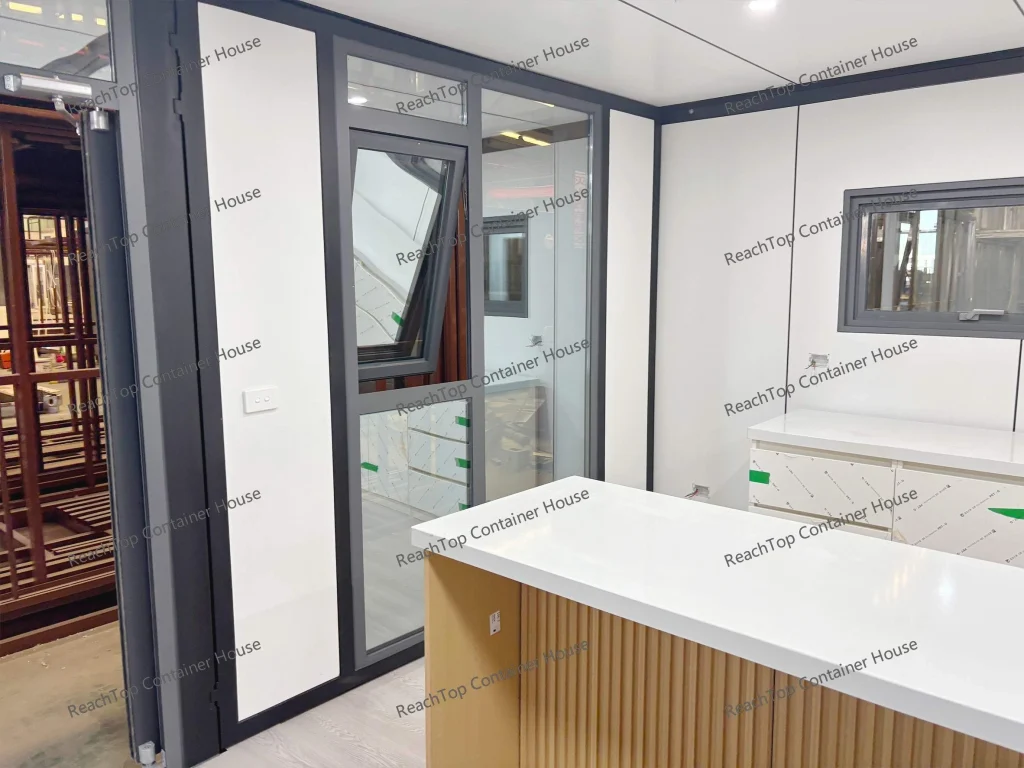
A good interior finish can improve the touch, appearance and comfort of the room. A good exterior finish can protect the wall surface and improve weather resistance. When combined with proper insulation material, these layers can make the building feel more complete and less temporary.
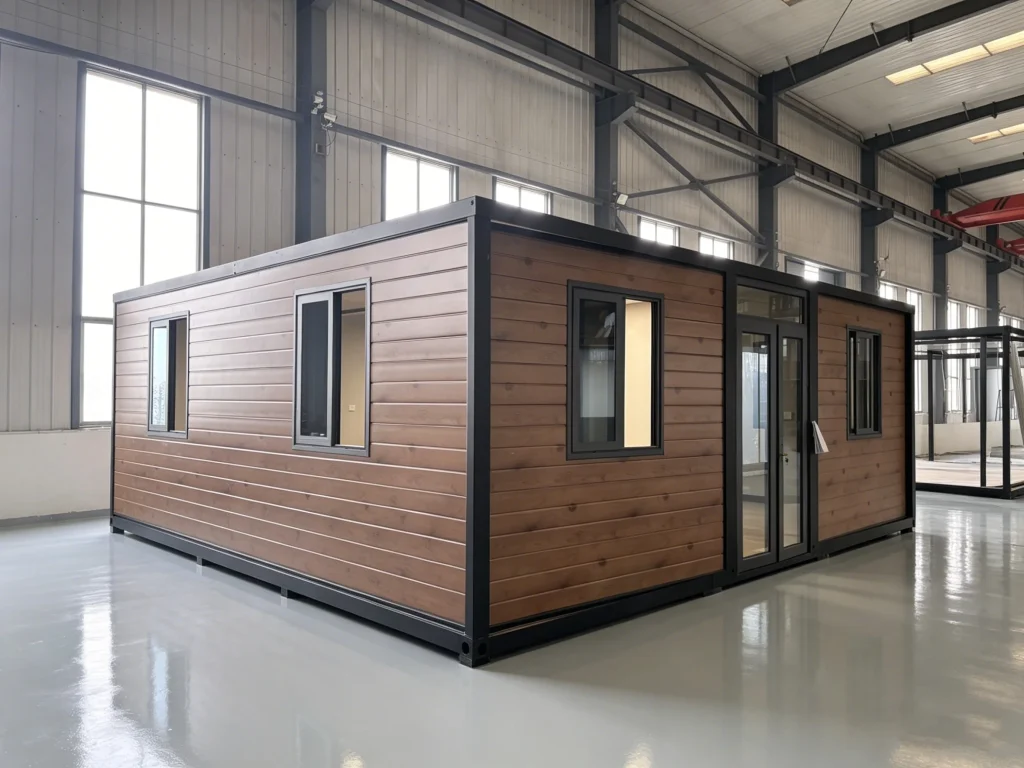
For example, interior bamboo fiber panels can improve the finished look of the room. Exterior metal carved panels or other cladding systems can improve appearance and provide additional protection. These materials should not replace the main insulation layer, but they can support the overall system.
For low-budget temporary use, basic sandwich panels may be enough. But for long-term residential use, commercial display, hotels, resorts and rental projects, interior and exterior upgrades are usually worth considering.
Do Not Only Compare the Insulation Material Name
Many buyers ask:
“Is your wall panel EPS or PU?”
This is a good starting question, but it is not enough.
A better quotation comparison should include:
- Insulation material
- Panel thickness
- Material density
- Panel surface material
- Window type
- Roof structure
- Door specification
- Air conditioning plan
- Interior wall finish
- Exterior cladding
- Sealing details
- Project climate
- Expected service life
For example, a PU panel can provide excellent insulation, but if the window is poor, the roof has no extra protection and the sealing is weak, the final comfort may still be disappointing.
On the other hand, a well-designed EPS expandable container house with good windows, proper roof protection and careful sealing can perform well for many standard projects.
Insulation performance is not a product label. It is the result of the whole system.
ReachTop Expert Recommendation
If the budget allows, ReachTop recommends using PU insulation panels, broken bridge aluminum windows, an extra full-house roof and upgraded interior and exterior wall finishes.
This configuration will cost more at the beginning, but the long-term value is clear. It can improve indoor comfort, reduce cooling and heating pressure, protect the roof and wall system, reduce maintenance problems and make the house feel more suitable for long-term use.
For many buyers, the cheapest quotation is attractive. But after the house is installed and used for months or years, the real difference appears in comfort, maintenance and durability.
For standard expandable container house projects, EPS is still a practical and cost-effective option. For higher-end residential, hospitality, rental or long-term commercial projects, PU and upgraded envelope systems are more suitable.
The right insulation choice is not about choosing the most expensive material. It is about choosing the correct system for your climate, budget and project purpose.
Three Expandable House Configurations and How They Feel Inside
The numbers explain the materials. The following three examples show how different configurations translate into the look and feel of a finished room, based on our experience with these houses.
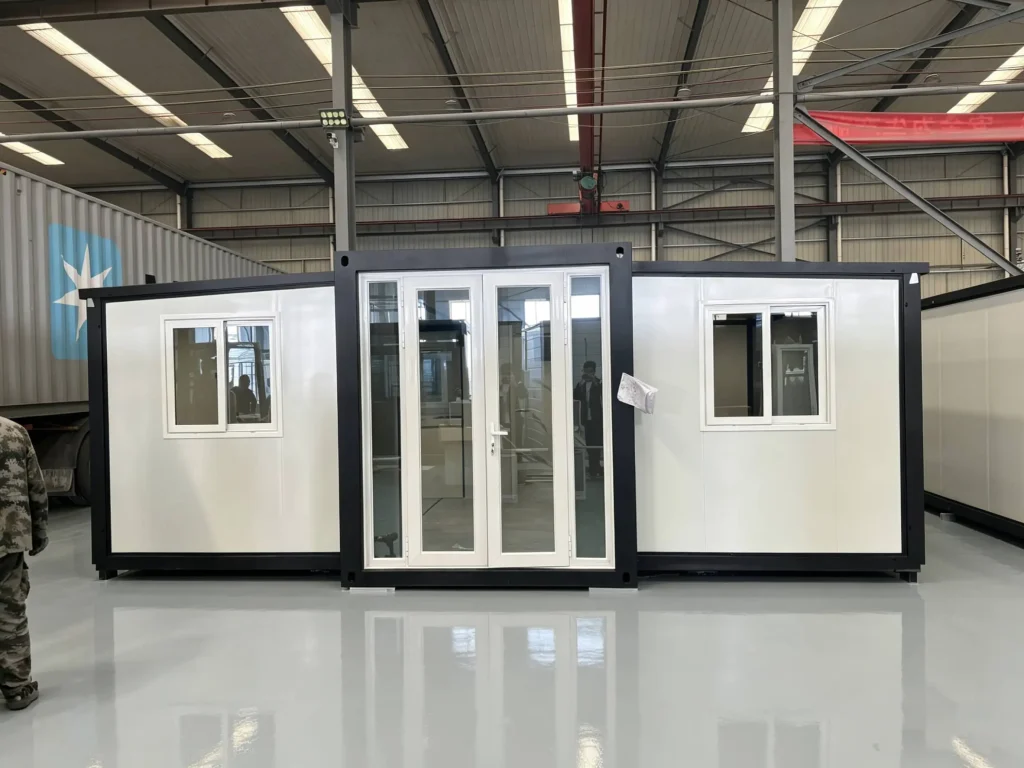
1. Basic White Expandable House: Budget First
This is the familiar white entry-level expandable house in the USD 6,000–8,000 factory-price segment. It provides a usable enclosed space with a basic fit-out.
Our assessment is straightforward: the thermal comfort is average at best, and the overall living experience is basic. The difference is noticeable throughout the room, including the interior finish and fittings.
For a project where the lowest initial cost is the main priority, this configuration has a place. For buyers who expect a comfortable everyday living space, we do not recommend this basic version. We would start with the next configuration.
2. EPS with Upgraded Interior and Exterior Finishes: A More Comfortable Home
This configuration keeps the EPS sandwich panels and adds carbon-crystal decorative panels inside and embossed metal cladding outside.
The house immediately looks more refined. The interior has a finished residential appearance, and the exterior has more texture and detail than the standard white-panel version.
The carbon-crystal panels provide the finished interior surface, while the EPS core continues to provide insulation. With the interior and exterior upgrades and a properly sized air conditioner, the room feels much closer to a conventional home.
For buyers balancing everyday comfort and cost, this is our recommended starting point. It is a substantial improvement in how the house looks and feels, while retaining the practical EPS panel construction.
3. PU Insulation in the Walls, Roof and Floor: The Largest Comfort Upgrade
The third configuration adds PU insulation around the external walls, in the roof and beneath the floor. All six sides of the living space receive attention.
The underfloor insulation is an important part of this upgrade. In the basic expandable-house packages we encounter, a dedicated underfloor insulation layer is commonly left out. A house can have a finished floor surface with no insulation beneath it.
Adding PU beneath the floor reduces heat transfer through that surface and helps keep the internal floor surface temperature closer to the room temperature. Together with the insulated walls and roof, it provides more complete protection around the occupied space.
Several experienced dealers visiting ReachTop have independently pointed out the underfloor insulation before we highlighted it. They recognise the difference because it is a detail often missing from basic configurations.
Of these three options, this is our clear recommendation when thermal comfort is the priority. The upgrade combines stronger insulation per millimetre with coverage of the walls, roof and floor.
Frequently Asked Questions
Is PU better than EPS for expandable container houses?
PU usually provides better thermal insulation performance than EPS at the same thickness. However, EPS is more cost-effective and is still suitable for many standard expandable container house projects. The final choice depends on climate, budget and long-term use requirements.
Is rock wool suitable for expandable container houses?
Rock wool has good fire resistance and acoustic performance, but it is not ReachTop’s first recommendation for expandable container houses. For this product type, panel support, structural stability and long-term performance are also important. EPS and PU are usually more suitable.
Do windows affect the insulation performance of a container house?
Yes. Windows and doors are often weak points in the building envelope. Upgraded broken bridge aluminum windows with double glazing can improve thermal performance, reduce noise and help control condensation.
Is an extra roof necessary for an expandable container house?
It is not always necessary, but it is strongly recommended for long-term use, especially in hot, rainy or harsh climates. An extra roof can reduce solar heat gain, improve drainage and protect the original roof structure.
Does air conditioning solve insulation problems?
No. Air conditioning can control indoor temperature, but it cannot replace a good insulation system. If the walls, roof, windows and sealing are poor, the air conditioner will work harder and the room may still feel uncomfortable.
What insulation system does ReachTop recommend?
For standard expandable container houses, ReachTop usually recommends EPS as a practical solution. For higher-end projects or long-term residential use, PU insulation, broken bridge aluminum windows, an extra roof and upgraded wall finishes are recommended.